How was Capitalism born? And, more in general, 1. does the economic structure determine its superstructure (including philosophy or religion), as in Marx; 2. does a certain philosophy, religion, etc. determine a certain economic result, as in Weber; or 3. do important actors select a certain philosophy, religion, etc., because it is more adequate for their needs? Or are there still other solutions (as in Hirschman’s 1977 The Passions and the Interests)?
Category Archives: methodology
Are there harmless periodisations? On Oetke 2013
(I beg again your pardon for the lack of diacritics)
The fore-last essay (called Classification and Periodization of Indian Philosophical Traditions: Some Conceptual and Theoretical Aspects) in Franco’s Periodization and Historiography of Indian Philosophy, by Claus Oetke, raises very general issues, departing from the problematic definition of “Indian philosophy”, in which both noun and adjective should be better assessed (does not “Indian” philosophy include also authors who were active in Burma or Tibet?
Anthropology means critical scrutiny—an interview with Stephan Kloos
I should have met Stephan Kloos because we both work at the Austrian Academy of Sciences, but in fact we met at a common friend’s party and only later realised we had seen each other quite often before in the Academy. After that, I started having a look at his work. Departing from his wonderful website, all his work is dedicated to the anthropology of Tibetan medicine, especially of Tibetan medicine in exile. Kloos 2013, for instance, investigates on how it ended up being recognised, in India, in the West and in the Tibetan community as a “medical system” and how this concept involves a strategy and the self-construction of a new “Tibetan” identity —once the Tibetan identity could no longer be determined on a geographical basis— as related to Buddhist ethics, i.e., to one’s altruistic attitude towards the others.
Scripture, authority and reason —About a new book edited by Vincent Eltschinger and Helmut Krasser
How do reason and authority interact and trace each other’s boundaries? Which one is the first to be allowed to delimit its territory and, by means of that, also the other one’s one?
Investigatio semper reformanda
Should we try to periodise Indian philosophy or shall we give up any attempt, since each one will be criticised and is in some respect flawed? Periodisation, as recently highlighted by Julius Lipner, is a form of classification and as such also a form of controlling (Lipner 2013).
Let us organise more Saṃvādas! An Interview with Mrinal Kaul
I met Mrinal Kaul for the first time in December 2012, when he attended the Coffee Break Meeting on textual reuse in Indian Philosophical texts. Since then, I tried to have him collaborate to many of my projects, but always failed, since he is already very busy with incredibly many others. You can read his blog here and find out something more about him on his Academia page. Once you have done this, add much more Sanskrit than you would believe, imagine a smiling, funny face and you will still have only a vague idea of him.
There is more than emic vs. etic: Madeleine Biardeau and the history of philosophy
Is the only alternative one faces while speaking about South Asia that between an etic (i.e., Western) and emic approach?
Looking at space instead of just surfaces: an interview with Gerald Kozicz
I came to know Gerald Kozicz because of the panel on Reuse I am organising for the EAAA conference in September 2014 together with Cristina Bignami and Julia Hegewald. We started discussing about his paper for the panel and then Gerald has been generous enough to send me and discuss per email with me many of his other articles. His papers impressed me because they were surprisingly different from my prejudices about art history. This unconventionality, both in Gerald’s research and in his career, made me desire to interview him.
Disciplines, Interdisciplinarity, Multidisciplinarity etc. in Sanskrit (and) Philosophy
If you have ever felt comfortable in one discipline… lucky you!
What is “new”?
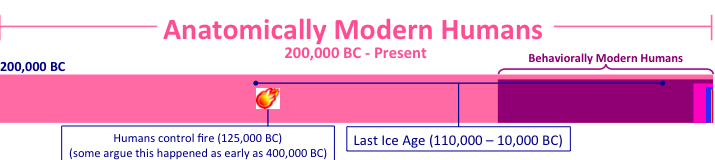
from www.waitbutwhy.com The blue vertical line on the right represents the CE
Did you just put in your research statement that you wrote a “new” argument in favour of Free Will, that your book offers a “new and fresh” perspective on the philosophy of history or even just that your interpretation of Plato is “completely new and compelling”? Consider reformulating.