“Text” can be taken (heuristically) to designate any configuration of signs that is coherently interpretable by some community of users.
TT Hindī position at Chicago
Do you work on Sanskrit and want to remain in the Academy? Consider having Hindī as your bread-winning topic and Sanskrit as your passion.
पदनित्यत्वं वेदनित्यत्वं च
किमर्थम् पदानित्यत्वं निषेद्धव्यम् ?
मीमांसकास् “शब्दो नित्य एव” इति मन्यन्ते । यथा वयं वृद्धव्यवहारे शब्दार्थसम्बन्धानधिगच्छामः, तथा भूते काले वृद्धाः अपि −इत्यनादिरेव शब्दप्रयोग इति ।
Sanderson is always an incredibly fascinating speaker. In this conference he discusses the dialectics of Śaivism and “orthodox Hinduism”: It is not only the case that Śaiva authors tried to be accepted as “orthodox Hindūs” and “orthodox Hindūs” tried to block them. By contrast, on both sides there were trends towards assimilation and resistance to these trends.
(Full disclosure: I have discussed a similar case of a complex dialectical relationship —this time between Pāñcarātra Vaiṣṇava theology and “orthodox Hindūism”— in an article to be published in the proceedings of IIGRS 4).
Read more books, in order not to be exploited: an interview with Camillo A. Formigatti
Camillo Formigatti works at the Cambridge Sanskrit Manuscript Project and is the author of many wonderful virtual catalogue sheets you can read directly online here. I met him only in 2009, while working at the first Coffee Break Conference, and now I wonder how I survived before without his acumen in the analysis of manuscripts as “things” and not (only) as carrier of a meaning
Jobs in “Asian Studies”
If you are looking for a job in “Asian Studies” be sure to check this blog on Chinese Philosophy, featuring practically all Call for Papers and jobs linked with Chinese Thought. Many of them (for instance the PhD program in Philosophy offered by the University of Singapore) are open also to researchers specializing on other areas of Asia and/or of Philosophy.
What is “new”?
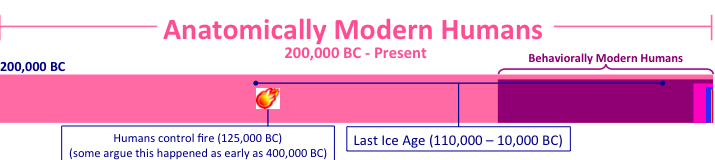
from www.waitbutwhy.com The blue vertical line on the right represents the CE
Did you just put in your research statement that you wrote a “new” argument in favour of Free Will, that your book offers a “new and fresh” perspective on the philosophy of history or even just that your interpretation of Plato is “completely new and compelling”? Consider reformulating.
9th Annual International Conference on Philosophy, 26-29 May 2014, Athens, Greece
I keep on thinking that one should prepare a panel on Indian philosophy for one of these conferences, but it is always too late when I finally remember it. Perhaps next year? Or do you have something ready?
Da allora siempre me he empeñado a respetar a tutti gli uomini […] porque en ellos se refleja la imagen misma de Dios. Con lo cual si no se socorre a quien sufre, a quien patisce la injusticia, a quien se muere de hambre, a quien es más debil, […] no se commete solo un pecado de omissione, sino que lo mucho más grave de blasfemia.
La rivoluzione della luna (Andrea Camilleri)
(Palermo: Sellerio, 2013)
In case you have not enough of me discussing about Sanskrit (and) Philosophy, you can read my blubberings about (Western) Theology and the problem of the Trinitarian God.