Since Mīmāṃsā (both in its Bhāṭṭa and in its Prābhākara subschools) focused primarily on the exegesis of the prescriptive portion of the Vedic Sacred Texts, the Mīmāṃsā texts offer richly developed discussions of deontic issues, both from a linguistic and from a logic point of view. Unfortunately, the lack of philosophically accessible translations has made most of such discussions remain confined to Sanskritists.
Possible applications of Mīmāṃsā deontics: on Chaudhuri and Vardi
There are fields in which the contribution of applied ethics and deontics are more than needed, such as that of the programming of artificial intelligence connected to robots which might interact with human beings. Chaudhuri and Vardi (their article can be downloaded here) quote the following case:
Sanskrit (2ys) Position at Leiden University
Leiden University invites applications for a fulltime University Lectureship in Sanskrit and Ancient Cultures of South Asia. Research specialization is open. Teaching will include Sanskrit courses and courses on premodern cultures and literatures of South Asia.
This is a temporary replacement position, and appointment will be fixed-term from August 2014 through August 2016.
Helmut Krasser, the Rebel Sanskritist —UPDATED
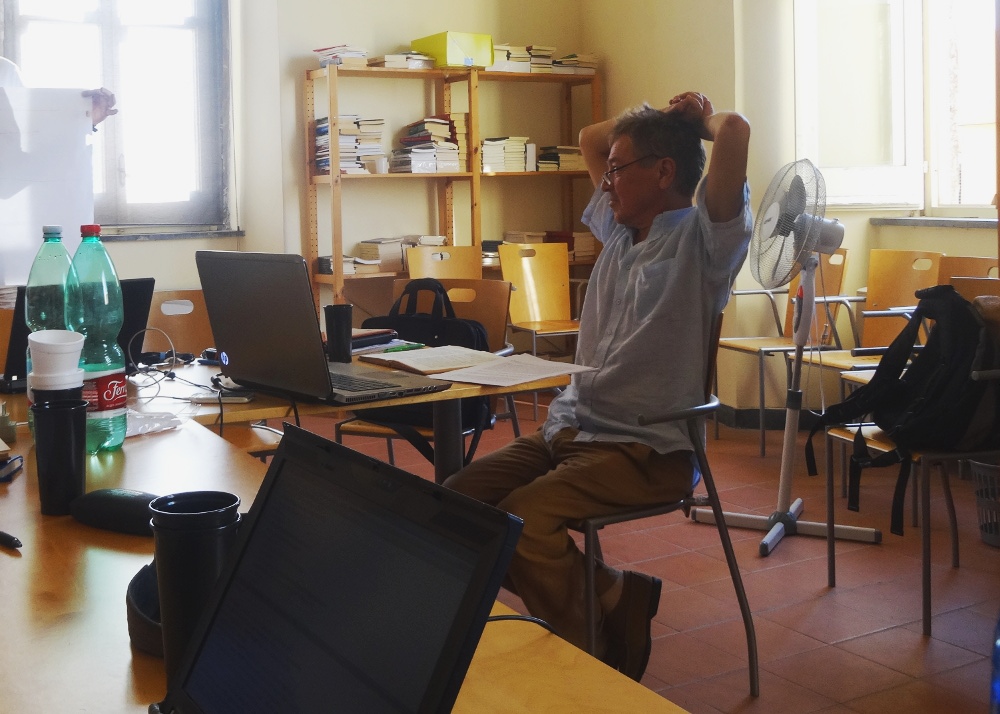
Photo by Birgit Kellner
I met Helmut Krasser during my Erasmus year in Vienna, back in the Nineties. We sat together (meaning that he, Horst Lasic and Ernst Steinkellner prepared and led the meetings whereas I and other people tried to follow and to add minor points from time to time) at the Academy, reading Jinendrabuddhi’s commentary on Dignāga’s Pramāṇasamuccaya.
मीमांसान्याययोः शब्दविषये विवादः -१-
पूर्वमीमांसासूत्रे सू॰ १।१।६ अरभ्य सू॰ १।१।२३ पर्यन्तम् शब्दस्वरूपविषये नैयायिकानां पूर्वपक्षाः प्रदर्शिताः (१।१।६–१।१।११) प्रतिवदिताश्च ।
१।१।६ विषयं प्रतिजानाति “कर्म एके तत्र दर्शनात्” इति । एके − नैयायिकाः मन्यन्ते, शब्दः कर्मैवास्ति, प्रयत्नानन्तरदर्शनाद् इति यावत् ।
१।१।७ सूत्रे द्वितीयो हेतुरुक्तः “अस्थानात्” इति । शब्दः कर्म, यतः शीघ्रं विनश्यति, विनष्टश्च न कुत्रचिदुपलभ्यते । सन्ति तु अर्थाः, ये सन्तोऽपि नोपलभ्यन्ते, मेरुवत् इति चेन्न । मेर्वादयः व्यवधानेभ्य एव नोपलभ्यन्ते । व्यवधानं विना सर्वमुपलभ्यमिति नैयायिकः ।
१।१।८ सूत्रेऽपि हेतुरुच्यते “करोतिशब्दात्” इति । लोके “सः शब्दं करोति” इति यावत् । किमर्थं लोकव्यवहारं प्रमाणमिति चेत्, उच्यते − यथा लोके वदन्ति तथा चिन्तयन्ति, न चानुपलब्धं किंचिद्वर्तते इति सूत्रे १।१।७ उक्तम् । तस्माद् यदुपलब्धं तच्चिन्तितं, यच्चिन्तितं च तल्लोकव्यवहारे व्यक्तमिति लोकव्यवहारः प्रमाणमिति नैयायिकः । तत्र तु −संस्कृता वागपि संकेतिका इति नैयायिकाः । अत एव संभवति यत् केवलं संस्कृतायां भाषायां “शब्दं करोति” इति व्यवहारोऽस्ति । वस्तुतश्च हङ्गरीभाषायां “शब्दं प्रमुञ्चति” इत्युच्यते, न तु “करोति” ।
१।१।९ सूत्रे यौगपद्यं हेतुत्वेनोक्तम् “सत्त्वान्तरे च यौगपद्यात्” इति । नानादेशेषु “शब्द”शब्दादयः यौगपद्येन श्रुताः । यद्येक एव शब्दो भवेत्, तर्हि एतदसम्भवम् । यथाहि ममैकः पुत्रः केवलं पाटलिपुत्रे दृश्यते, न तु यौगपद्येन पाटलिपुत्रे वारणसीपूरे च ।
किम् मन्यन्ते तत्रभवन्तः, कः कः हेतुः युक्ततमः?
शब्दस्वरूप एतत् “पोस्ट्” अपि पठितव्यम्
“If you want to keep on with this work, you have to be proactive”—An interview with Chiara Barbati —Part 2
Q1 EF: In this second part of our chat, we will focus on career. How did your scholarly career start?
CB: I started by focusing on Indo-European studies and, consequently, learnt Sanskrit, Armenian… and Sogdian, which immediately interested me most [see Q2 of part 1].
PhD programs in Indian Philosophy in Europe—Updated
This post is the European continuation of Andrew Nicholson’s one. Andrew is also the one who prompted me to write a European list.
Indian philosophy is taught in at least two different places in Europe:
What is unreal?
The term tuccha means in Classical Sanksrit “worthless”, “insignificant”. In Vedānta, however, it gets a more specific technical meaning, to denote the absolute unreality of chimeral entities, such as the khapuṣpa (flower in the air), which will not and cannot ever exist.
Will the journey ever come to its goal? On Clooney 2013
Several years ago I had some pain in convincing a friend working on Husserl that the “phenomenologist” J. Mohanty which he knew too well was the same as the scholar of Sanskrit Philosophy J.N. Mohanty (I had similar problems in convincing the same person that avatar is a Sanskrit word). Just like there are two Mohantys, with two different target audiences, so there are two F.X. Clooneys.
Due to the fact that I work in an underrepresented area of philosophy (Indian philosophy, even worse: Pūrva Mīmāṃsā) and I am a woman, I am more than interested in the general topic of “making philosophy more inclusive“. But what do we really mean by this slogan?
We might mean:
At the link above you can read my thoughts on this topic.