God and realism

Marginal notes on a workshop in Hawai'i, part 2

Can God as the perfect omniscient knower guarantee the possibility of a reality disidentified from all local perspectives and thus independent of them, though remaining inherently intelligible (by God Himself)? It depends on how one understands God.

As discussed already here, Indian authors can mean at least four different things when they speak about “God”, namely:

  1. —the devatās of mythology, like Indra and Zeus (during this workshop in Hawai’s, Andrew Nicholson has shown several examples of how philosophers make fun of this naive conception of Gods)
  2. —the īśvara of rational theology. He is usually omniscient and omnipotent and mostly also benevolent. In Indian thought, He can be proven to exist and to be such through rational arguments (e.g., through an inference from the fact that mountains, being an effect, need a creator, like pots).
  3. —the brahman of Advaita Vedānta is an impersonal Deity. In some forms of Vedānta it is interpreted pantheistically as tantamount to the universe.
  4. —the bhagavat kind of God is the one one is linked to through a personal relationship. His or Her devotees might consider Him omniscient or omnipotent, but in fact their reasons for loving Him of Her are different and regard their being in relation with Him or Her.

Which God can help guaranteeing the world’s reality? The devatā kind of Gods are clearly irrelevant for this purpose, since they are not even omniscient and surely do not represent an impartial perspective. The brahman kind of God is omniscient only in a sense akin to the Buddha’s being omniscient, namely insofar as it does not lack any relevant information, but it does not at all guarantee the reality of the world of direct realism. In fact, the world is for Advaita Vedāntins an illusion.

The īśvara kind of God seems the best candidate. But which kind of īśvara? Matthew Dasti‘s talk elaborated on the early history of īśvara in Nyāya, showing how the system’s basic premisses at least facilitated the elaboration of an īśvara concept. This evolution culminates in a full-fledged rational theology by Udayana. For Udayana, the īśvara he tries to prove rationally is not just any intelligent maker that can be inferred as the cause from the premise that the earth, mountains and plants sprouting from it are effects. That intelligent maker had to be:*

  • A super-soul with eternal knowledge of everything, and especially of the past and future good and bad actions of all human beings that ever lived.
  • One who has natural control or lordship over the material universe and other individual souls whose bodies he creates according to their beginninglessly earned merits and demerits.
  • One who joins the eternal atoms in the beginning of each cosmic cycle according to a remembered blue-print giving rise to the two-ness in a dyad by his primordial act of counting.
  • One who makes the otherwise unconscious “destiny” (unseen karmic traces, adṛṣṭa)) or law of moral retribution work.
  • One who acts directly through his eternal will and agency without the mediation of a body, although all the “intelligent makers” one has ever encountered produce effects with a body of their own.
  • One who composes the Vedas which tell human beings how to live a good life, through “do”s and “don’t”s, which would otherwise be devoid of the imperative force that they command.
  • One who establishes the conventional connection between primitive words and their meant entities.
  • One who, after creating the world, also sustains and in the fullness of time destroys it.
  • Showers grace on humans and other creatures so that each soul can eventually attain their summum bonum—final liberation from all ensnaring karma and suffering.
  • One who remains constantly and uniformly blissful through all these actions which do not touch his changeless essence and for which he has no “need”.

Such an īśvara has been discussed by Arindam Chakrabarti in his final talk on Vācaspati, insofar as He seems to be the only kind of God who can be said to be omniscient in the “hard” sense of possessing a complete knowledge of all states of affairs. However, He is vulnerable to objections to omniscience raised both in European and Indian philosophy. E.g.: How to delimit the range of “all” in “omniscience“? Can He really know also future events? If so, this seems to contradict our free will and even the possibility of non-necessary, contingent events. More in general, how can God know past and future events as such, though being Himself atemporal (this topic has been dealt with by Shinya Moriyama in his talk as well as in his 2014 book)? Not to speak of the pragmatic problems caused by omniscience, namely that it is altogether different from the way we usually experience knowledge to happen, i.e. in a processual way, and that one could never be sure that anyone (even God) is omniscient, since we are not omniscient and, therefore, could not test Him. Last, as outlined by Arindam (and by Patrick Grimm’s Cantorian argument against omniscience), God’s omniscience seems deemed to fail, since it cannot be proven to be logically conceivable.

The general problem appears to me to be that the īśvara is at the same time the knower of all and part of the system which He should know completely, so that He cannot escape the restrictions which apply to this world (in which knowledge is experienced to be processual, entities are not at the same time temporal and non-temporal, and one element cannot know the whole).

*The following points are all discussed by Udayana. For further details, see Chemparathy 1972. The present formulation of the list is largely indebted to Arindam Chakrabarti.

Shinya Moriyama also wrote a report about the same workshop, unfortunately (for me) in Japanese. Google translate was enough to understand that it is quite interesting and gives one a perceptive insight in the Philosophy Department in Hawai’i. You can read it here.

Omniscience and realism

Marginal notes about a workshop in Hawai'i

A non-intelligible entity cannot be conceived to exist. But, if the world needs to be known in order to exist, we need to postulate a non-partial perspective out of which it can be known. Since the perspectives of all human beings (as well as those of other animals, I would add) are necessarily partial and cannot be reconciled (how could one reconcile our perspective of the world with that of a bat?), this perspective needs to be God.

Animal theology

Paolo De Benedetti's death

The news of the death of Paolo De Benedetti reached me while I was reading a short book of him (E l’asina disse…).

Paolo De Benedetti is well-known especially for his studies on Hebraism, but here I would rather like to remember him for his articles and books on animals’ and plants’ theology. This is a problem which is much less evident in South Asian religions, given the general acceptance of a (hierarchical) continuity between animal and human lives. Yet, as already discussed here, the same continuity is not generally accepted in the case of plants.
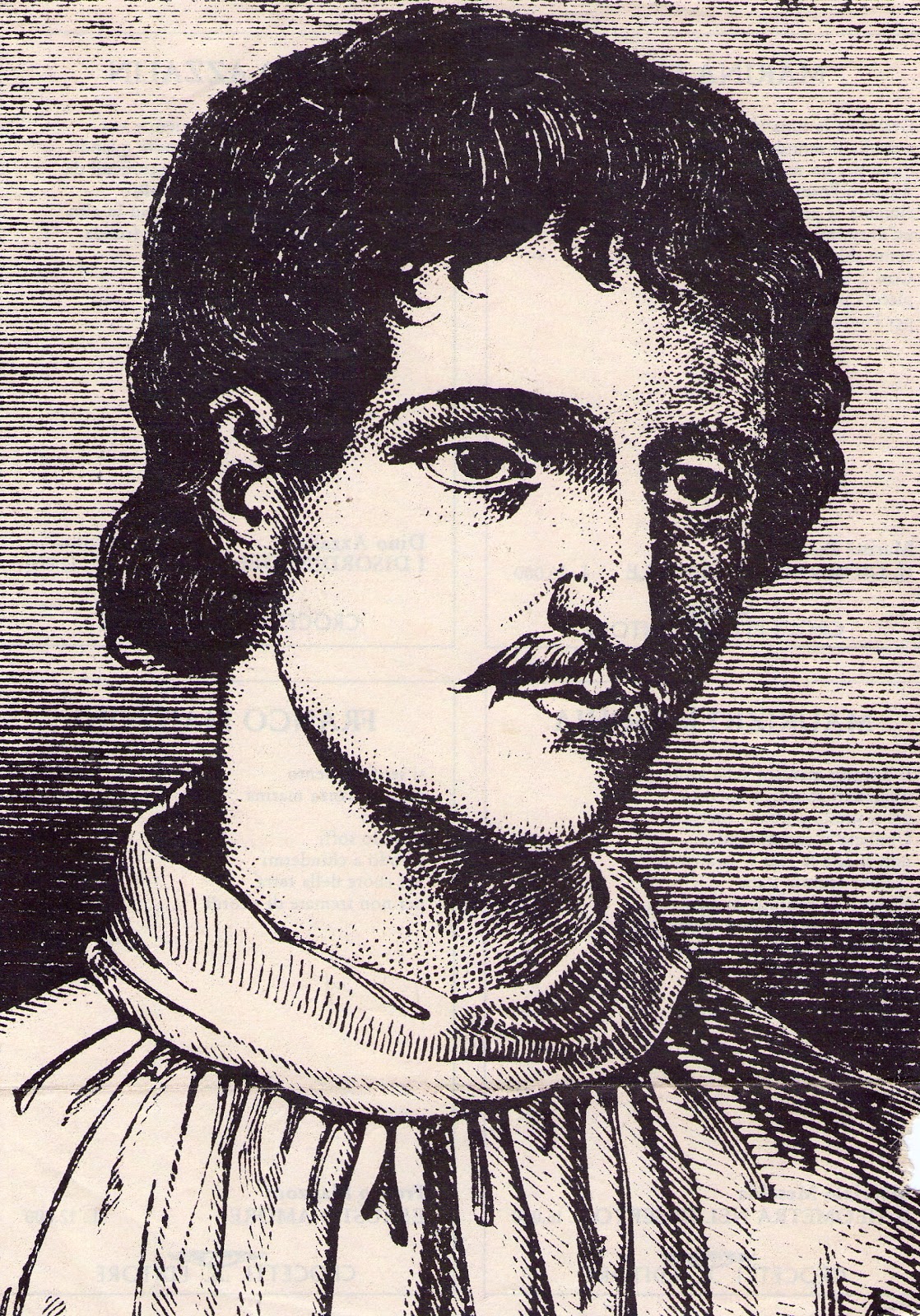
De Benedetti used Singer’s arguments about suffering as the distinctive character shared by all living beings and keeping them alike. Unlike Singer, however, De Benedetti saw the commonality of animals, human beings and plants in a theological perspective: They are all created, not natural beings and their being alive is what God has donated to them.

Analytical Philosophy of Religion with Indian categories

Wednesday and Thursday last week I enjoyed two days of full immersion in the Analytical Philosophy of Religion. In fact, the conference I was attending was about the ontological status of relations from the perspective of Analytical Philosophy of Religion and most speakers started their talk saying that they were not experts in the one or in the other field. I was neither nor, which made me the sub-ideal target for all talks —and yet one who could learn a lot from all.

A few random remarks:

  1. “God” is an ambiguous term, in fact so ambiguous that I wonder why does not each study about philosophy of religion start with a discussion of what the author means by this word. I pragmatically distinguish between god as devatā ‘deity’ (a superhuman being which is better than a human one, but only insofar as s/he has the same qualities of a human being in higher degree, like the Greek and Roman deities of mythology), god as īśvara ‘Lord’ (the omniscient and omnipotent being of rational theology), god as brahman ‘impersonal being’ (the impersonal Absolute of most monisms, including Bradley’s one discussed by Guido Bonino) and god as bhagavat ‘personal God’ (the personal God one directly relates to in prayers, without necessarily caring for His/Her omnipotence or omniscience, but rather focusing on Him/Her as spouse, parent, child, etc.). Within this classification, Analytical Philosophy of Religion appears to focus on the īśvara aspect of God.

Ontology of relations in Analytical Philosophy of Religion

Wednesday and Thursday there will be a conference entitled Relatio Subsistens in Verona (Italy). I am looking forward for the chance of discussing the Viśiṣṭādvaita concept of apṛthaksiddhatā ‘indissolubility’ between God and knowledge in Analytical terms.

The subject as knower and doer in Yāmuna’s Ātmasiddhi

Again on the ontology of qualities and substances

Opponents coming from the Advaita field figure often in Yāmuna’s Ātmasiddhi, which shows that even before Rāmānuja Vaiṣṇava authors were taking seriously the challenge of Advaita. Even more interesting is the way Yāmuna answers to them. Let us see some examples concerning the concept of self (ātman):

[Obj.:] But the fact of being a cogniser is the fact of performing the action of cognising and this implies modifications and is (typical of) insentient things and belongs to the sense of Ego.

Is the monologue also a dialogue?

No, taught Martin Buber, since a monologue lacks the dimension of Otherness. He was so adamant about that, that he even applied it to the case of God. Maurice Friedman (Martin Buber. The Life of Dialogue, p. 82) describes the relation of God and each single human being as follows:

If God did not need man, if man were simply dependant and nothing else, there would be no meaning to man’s life or to the world. ‘The world is not divine sport, it is divine destiny’.

Martin Buber’s own words (I and Thou, p. 82) are even more direct:

You know always in your heart that you need God more than everything; but do you not know too that God needs you—in the fullness of His eternity needs you? […] You need God, in order to be—and God needs you, for the very meaning of life.

Somehow, I am not surprised that Maurice Friedman participated in one of Daya Krishna’s saṃvādas (one can read the transcripts in Intercultural Dialogue and the Human image, Maurice Friedman at Indira Gandhi National Centre for the Arts.

Is philosophy an involution of Buddhism (and other religions)?

This is more or less the thesis advanced by Jayarava in his longest comment on this post.

The idea is that the (Buddhist) religion is primarily experiential and that philosophy is a later reification which misses the main point at stake and moves the emphasis away from what really counts. Moreover, in the case of Buddhism (but I am inclined to think that no other theology would survive Jayarava’s analysis) the result is full of inner contradictions and does not stand a critical inquire.

Thus, why engaging in philosophical thought, if you care for a given religion? Why entering a field in which you will loose anyway, since sooner or later a new development in, say, physics or neurosciences will show that you are at least partly wrong?

A possible answer would be to claim that natural sciences and theology do not speak about the same things (a claim Jayarava appears to refute). Moreover, one might claim that human beings naturally try to understand (as in Aristotle). But are there positive reasons for engaging in philosophy if one comes from a religious standpoint? Let us consider Giordano Bruno’s paradoxical words on this topic (as you will all know, Giordano Bruno was a Catholic priest and philosopher who was burnt on 17.2.1600 because of his heretic ideas —this sonet praises the ignorance of those who do not question anything, as if this were a moral virtue):

IN LODE DELL’ASINO:

Oh sant’asinità, sant’ignoranza,
Santa stoltizia, e pia divozione,
Qual sola puoi far l’anime si buone,
Ch’uman ingegno e studio non l’avanza!

Non gionge faticosa vigilanza
D’arte, qualunque sia, o invenzione,
Né di sofossi contemplazione
Al ciel, dove t’edifichi la stanza.

Che vi val, curiosi, lo studiare,
Voler saper quel che fa la natura,
Se gli astri son pur terra, fuoco e mare?

La santa asinità di ciò non cura,
Ma con man gionte e ’n ginocchion vuol stare
Aspettando da Dio la sua ventura.

Nessuna cosa dura,
Eccetto il frutto dell’eterna requie,
La qual ne done Dio dopo l’esequie!

Beginningless time and a nice whish from Veṅkaṭanātha

“[Obj.:] Then, let it be that there is a beginning in the liberated beings (i.e., that there is a point in time in which conscious beings started achieving liberation). Before that, there would be no liberated one.
[R:] There is no contradiction in the idea of a continuous and beginningless succession of liberated [beings]. For, it is not the case that someone who was ab initio liberated is then bound. In this case the liberation (and not the bondage) would be something to be realised, which is contradictory. Rather, all beings, bound ab initio liberate themselves, the one after the other, when they get the way”.

(atha mukteṣv ādiḥ, sa kathaṃ tvayā viditaḥ? tataḥ pūrvaṃ muktābhāvād iti cet, tam api kathaṃ vettha? anādimuktau vyāghātād iti cen na; muktapravāhe vyāghātābhāvāt | na hy anādimuktaḥ kaścid badhyate, sādhyamokṣo vā bhavet, yena vyāghātas syāt; kiṃ tu, anādibaddhās sarve ´pi labdhopāyāḥ krameṇa mucyante |, autocommentary on TMK 2.25)

The permanence of time and the radical alterity of mokṣa seem to create a tension here.
Does it entail that each one of today’s beings will be liberated, sooner or later? In other words, do all possiblities need to actualise themselves sooner or later in an endless time?

Buddhist morality and merciful lies

Amod Lele recently asked whether there is an emic Buddhist morality or whether this is only a Yavanayāna invention

from http://sebersole.wordpress.com

(i.e., an invention of contemporary Western-trained Buddhists). The question is in itself interesting, but the discussion it triggered is even more, since Jayarava (who blogs here) added the problem of the possible inconsistency of the doctrine of karman if one denies the continuity of the self. That there is a problem cannot be denied: Why should we care about the karman our actions accumulate, if it is not going to affect “us”?