Category Archives: Philosophy

Studio of Fedele Fischetti
Yes, with Michael Dummett’s death the “linguistic turn” in analytic philosophy has come to an end.
Yes, the new dominant trend is the move towards neurosciences, which are used to deal with issues in philosophy of mind, (cognitive) linguistics, (cognitive) semantics, morality, etc.
A reader on “Indian Philosophy”?
Shall we try to write/edit readers with Sanskrit philosophical materials? Yes, by all means. Everything is better than neglect. However
Self in Indian and Greek Philosophy
Lots of interesting people (and friends) will discuss the issue in July in Exeter.
Note that there will be an interesting methodological section: On which basis can one compare Greek and Indian philosophy? Because of their common origin? Because of a convergence in human thought?
The most amusing version of the Philosophers’ Carnival I know of! With a reference to Jonathan Edelmann’s piece on Theology and Philosophy in the Indian context which you can read here.
Who studied Mīmāṃsā deontics?
Since Mīmāṃsā (both in its Bhāṭṭa and in its Prābhākara subschools) focused primarily on the exegesis of the prescriptive portion of the Vedic Sacred Texts, the Mīmāṃsā texts offer richly developed discussions of deontic issues, both from a linguistic and from a logic point of view. Unfortunately, the lack of philosophically accessible translations has made most of such discussions remain confined to Sanskritists.
Possible applications of Mīmāṃsā deontics: on Chaudhuri and Vardi
There are fields in which the contribution of applied ethics and deontics are more than needed, such as that of the programming of artificial intelligence connected to robots which might interact with human beings. Chaudhuri and Vardi (their article can be downloaded here) quote the following case:
Helmut Krasser, the Rebel Sanskritist —UPDATED
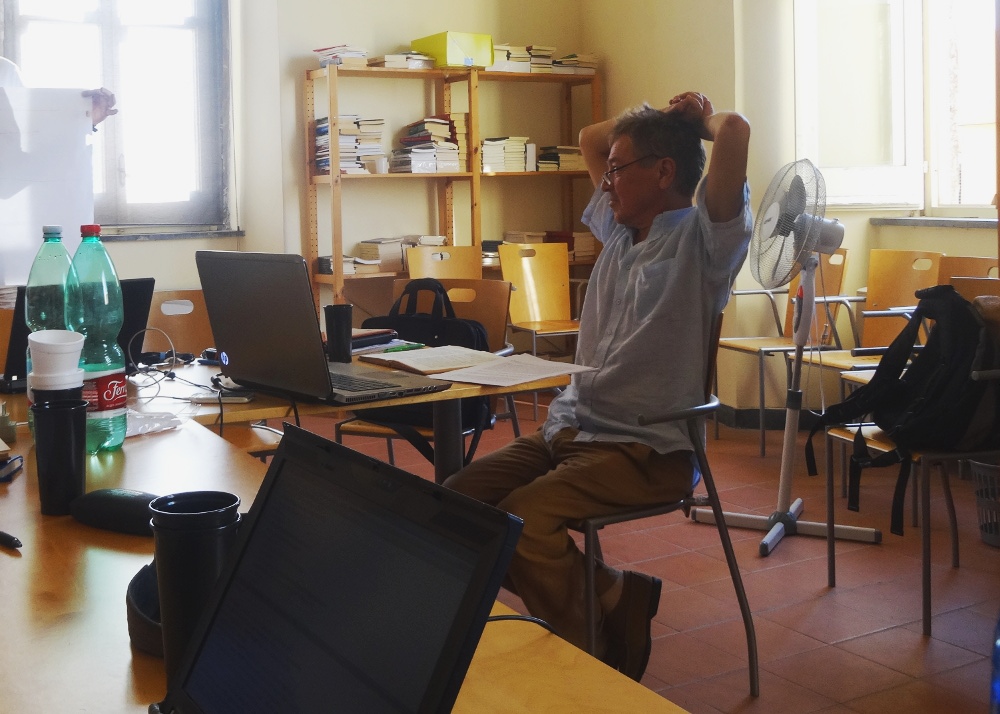
Photo by Birgit Kellner
I met Helmut Krasser during my Erasmus year in Vienna, back in the Nineties. We sat together (meaning that he, Horst Lasic and Ernst Steinkellner prepared and led the meetings whereas I and other people tried to follow and to add minor points from time to time) at the Academy, reading Jinendrabuddhi’s commentary on Dignāga’s Pramāṇasamuccaya.
Due to the fact that I work in an underrepresented area of philosophy (Indian philosophy, even worse: Pūrva Mīmāṃsā) and I am a woman, I am more than interested in the general topic of “making philosophy more inclusive“. But what do we really mean by this slogan?
We might mean:
- Including more people from underrepresented groups (women, transsexuals, disabled people, black people, ethnic, political and religious minorities…)
- Including more people working on underrepresented topics (e.g., feminist philosophy, (critical) race-theory, philosophy of disability, Africana philosophy…)
At the link above you can read my thoughts on this topic.
What is unreal?
The term tuccha means in Classical Sanksrit “worthless”, “insignificant”. In Vedānta, however, it gets a more specific technical meaning, to denote the absolute unreality of chimeral entities, such as the khapuṣpa (flower in the air), which will not and cannot ever exist.
Finally an interesting blog-post saying some basic things about the relation between philosophy and physics, explaining that “being useful” is not tantamount to “being useful to my current calculations” and that, accordingly, many physicists criticising philosophy are just misunderstanding their target.
I would have added something more regarding the epistemology of the issue, but for that have a look at the interesting comments (e.g., one says that philosophy is useful for asking questions, but lousy for answering them…).