Beginningless time and a nice whish from Veṅkaṭanātha

“[Obj.:] Then, let it be that there is a beginning in the liberated beings (i.e., that there is a point in time in which conscious beings started achieving liberation). Before that, there would be no liberated one.
[R:] There is no contradiction in the idea of a continuous and beginningless succession of liberated [beings]. For, it is not the case that someone who was ab initio liberated is then bound. In this case the liberation (and not the bondage) would be something to be realised, which is contradictory. Rather, all beings, bound ab initio liberate themselves, the one after the other, when they get the way”.

(atha mukteṣv ādiḥ, sa kathaṃ tvayā viditaḥ? tataḥ pūrvaṃ muktābhāvād iti cet, tam api kathaṃ vettha? anādimuktau vyāghātād iti cen na; muktapravāhe vyāghātābhāvāt | na hy anādimuktaḥ kaścid badhyate, sādhyamokṣo vā bhavet, yena vyāghātas syāt; kiṃ tu, anādibaddhās sarve ´pi labdhopāyāḥ krameṇa mucyante |, autocommentary on TMK 2.25)

The permanence of time and the radical alterity of mokṣa seem to create a tension here.
Does it entail that each one of today’s beings will be liberated, sooner or later? In other words, do all possiblities need to actualise themselves sooner or later in an endless time?

Dialog between Science and Philosophy: a new event

The event, sponsored by the Indian council of Philosophical Research, Delhi,  is scheduled to be held as a Discussion meeting  in the Poornaprajna Institute of Scientific Research, Bangalore from 25th Oct to 27th October.

The event is an outgrowth  of the ongoing Dialog between Science and Philosophy started  nearly a decade back in Nava Nalanda Mahavihara ‘Nalanda’ Bihar (for the past Nalanda Dialogs, please visit this link).

This Bangalore Event is actually a part of a current  project  motivated by  the lessons of the Nalanda Dialogs — a project entitled “Dialog across Traditions – Modern science and traditional Indian insight about Reality”.


In this event the organisers will  try to engage Indian philosophers of different schools  in a Dialog with science, will try to get the philosophers response to questions pertaining to different areas of difficulties related to foundation of science issues. Sample questions are already being distributed among the  philosophers after locating them mainly in places of traditional importance like Mithila, Varanasi and places in South India .

The process of locating scholars interested to respond to the issues are still going on.

For almost all details related to this Project as well as many events prior to the October Dialog, check this link. This site is being regularly updated to help keep track of the prior events that will lead to the Bangalore Dialog. The organisers will really appreciate suggestions  from readers about Areas of Indian Philosophy which can be better extended to meet the epistemological criteria of modern science (particularly Physical science, since the organisers come themselves from Physics).

Is the self the same as the intellect?

Is the self the same as the bodily parts? Most probably, most readers will be inclined to answer that this is not the case. But the question becomes trickier if we ask whether the self is the same as the intellect.

Buddhist morality and merciful lies

Amod Lele recently asked whether there is an emic Buddhist morality or whether this is only a Yavanayāna invention

from http://sebersole.wordpress.com

(i.e., an invention of contemporary Western-trained Buddhists). The question is in itself interesting, but the discussion it triggered is even more, since Jayarava (who blogs here) added the problem of the possible inconsistency of the doctrine of karman if one denies the continuity of the self. That there is a problem cannot be denied: Why should we care about the karman our actions accumulate, if it is not going to affect “us”?

In case you are in Cracow next week

You might want to come and raise some interesting objection at one of the two lectures below:

Body and self in Śrīvaiṣṇavism. A “hands-on” discussion of Veṅkaṭanātha’s Seśvaramīmāṃsā (ad 1.1.5) (Wed, 11 am)
—Knowing the unknowable: Vedānta Deśika on supersensory perception (at the Pedagogical University of Cracow, Wednesday, 4 pm).

Veṅkaṭanātha as a way for reconstructing the history of Sanskrit philosophy in South India: The Bṛhaṭṭīkā

Veṅkaṭanātha is an important milestone for the reconstruction of the history of Indian philosophy. In fact, he is a historical figure and the reconstruction of his thought is also facilitated by the contextual knowledge already available about the times, the cultural and geographical milieu, and the religious tradition related to him.

Understanding false sentences

For Mīmāṣakas, a non-defeated belief counts as knowledge as long as the opposite is proven. This means that according to Mīmāṃsakas, for the Veda, the absence of defeating conditions is in itself equivalent to its truth. from Art.com
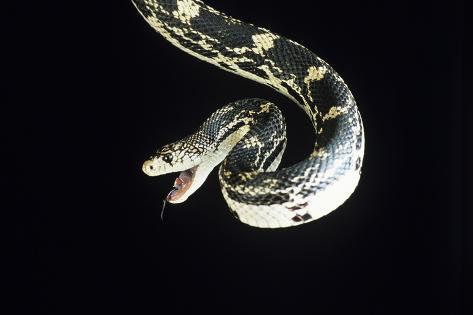
This, however, does not amount to its truth from the point of view of a theory which considers only justified true belief as knowledge. Incidentally, the Mīmāṃsā’s refusal to distinguish between justified belief and knowledge offers a way out of a difficulty found in every account of linguistic communication as an instrument of knowledge, i.e. the problem of how we can understand false utterances (see Chakrabarti 1986, Matilal 1990:61-8, Mohanty 1992:253-5, Ganeri 1999:18-25). Roughly, the problem lies in how we can understand that there is a snake in the next room after hearing the sentence “there is a snake in the next room” although there is no snake in the next room. Linguistic communication is an instrument of knowledge, but the belief that there is a snake in the next room cannot amount to knowledge. How can this content be possibly conveyed? In order to justify that we understand false sentences, Indian theories of linguistic communication as an instrument of knowledge would need a (preceding) status of non-committed awareness of the meaning, claim the authors listed above.
However, this is not needed in the case of Mīmāṃsā. Mīmāṃsakas would describe this situation by saying that our initial knowledge of the presence of a snake in the next room is later defeated as soon as we see that there is no snake there.

A review of Vincent Eltschinger’s Buddhist Epistemology as Apologetics

An interesting review of Vincent Eltschinger’s last book, Buddhist Epistemology as Apologetics, by Peter Bisschop which has the advantage of

  1. summarising the main thesis of the book (the Buddhist epistemological school is not only a natural development of the Buddhist tradition of dialectics, but also the reaction to external attacks, e.g., by Kumārila Bhaṭṭa)
  2. highlighting Eltschinger’s innovative methodological choice of reading Buddhist epistemology through its social history
  3. adding a few critical remarks* about the structure of the book (“An overall conclusion rounding off the four individual chapters would have been welcome, in particular because the subject of the first two chapters […] and the last two chapters […] differ quite strongly from each other”, p. 268) and about the possible distinction between Vaiṣṇava and Śaiva attitudes towards Buddhism (“A text like the Skandapurāṇa […] does not contain a single reference to pāsaṇḍins [‘heretics’, EF]. This may not only reflect a difference in time but also in position, that of the conservative, anti-Buddhist Vaiṣṇavas of the Viṣṇupurāṇa on the one hand and the soon-to-be dominant Śaivas of the Skandapurāṇa on the other”, p. 265).

*Long-term readers will now know that I am biased in favour of structured criticism (and against lists of useless typos and baseless praises). Accordingly, they may disagree with me on the importance of this last point if they prefer different types of reviews.